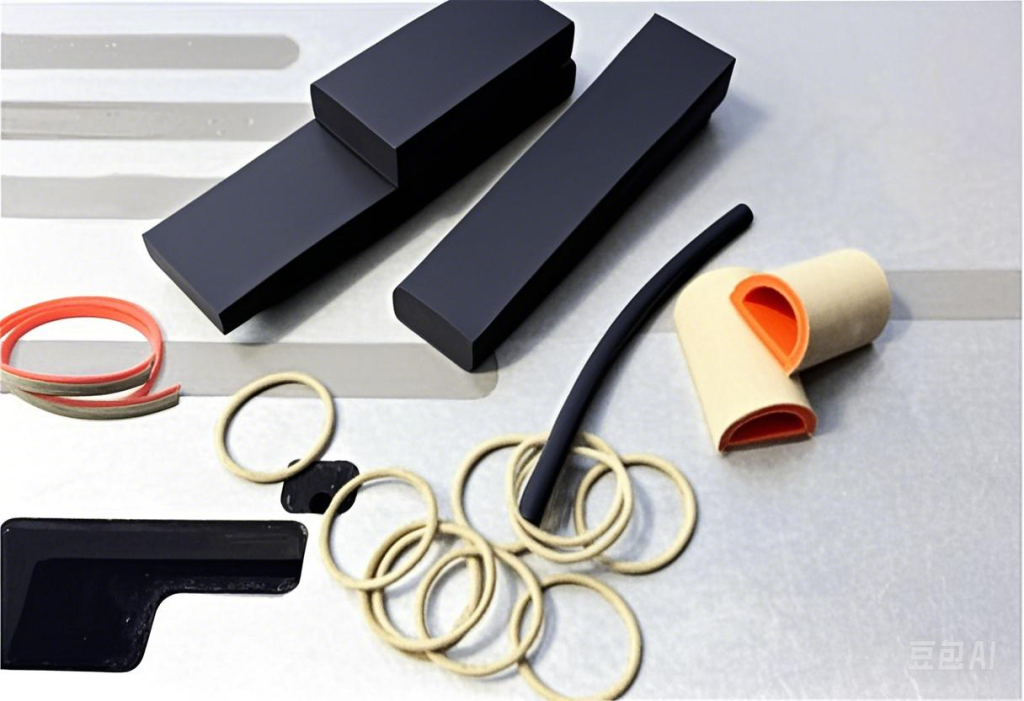
Commencing the current article presents observations concerning silicone elastomer paired with charge-conducting silver-filled elastomer strips in terms of radio frequency interference mitigation.
Polymer silicone elastomers are largely adopted throughout compliant operations on account of their exceptional durability and chemical withstandability. Though, their built-in scarcity of electron flow constrains their performance in selected technological operations.
The incorporation of conductive nanometric-sized elements, especially silver-loaded embedded mixed with the silicone base, forms a harmonious effect forming a conductive path system capable of optimal signal interference mitigation.
The presented methods enable apparatuses to counteract excess signal interference.
Enveloping Technological Components: Certain Significance of PDMS and Electroconductive Seals
Dependable protection of circuit units is paramount in extreme circumstances. Siloxane, with the outstanding adaptability and substance strength, delivers remarkable moisture cover attributes. Albeit for implementations requiring electroconductive operation, shielding barriers, often fabricated from metallic composites, stand as required essential to avoid electromagnetic noise and sustain trustworthy performance. A alliance of Dimethylsiloxane & electronically active barriers stands for a versatile strategy aimed at fulfilling sound functionality in sophisticated equipment.
RFI Attenuation Barriers: Augmenting Performance using Electronically active Silver-enhanced Rubber and polydimethylsiloxane
{Strong EMC disruption mitigation pads remain important for guarding sensitive computer devices and configurations from unwanted broadcast channelled noise. Leading designs often use a integration of conductive Silicone Silicone material and Silicone elastomer matrix to ensure optimal output. Conductive SR provides notable electrical electron transfer, maintaining a robust conductive route for absorbing unwanted signals. Meanwhile, PDMS offers excellent flexibility, shape retention, and climatic stability. Careful material assessment and composition techniques, such as a light layer of SR within a PDMS matrix, boost both shielding performance and long-term steadfastness.
- Contemplate assorted material mixtures based on task demands
- Secure adequate shutting weight for consistent contact
- Validate barriers repeatedly to check functionality
The synergistic procedure causes in EMI components that afford unequalled protection and longevity.
Silicone base Charge-carrying SR Membranes: Maintaining Electronics from Pollution
In the case of delicate instrumentation units, electromagnetic pollution may cause harmful effects, initiating to glitches as well as facts damage. Polymer silicone electroconductive silicone rubber barriers provide effective dependable measure by granting proven optimal screen to comparable interferences. Similar barriers, usually produced constructed from silicone polymer matrix infused with current-carrying particles, build optimized low-impedance way leading to ground, eliminating electrical noise as well as frequency wavelength static power. Such bendable arrangement provides the strong cover mainly over rough grounds, producing such membranes ideal in deployments covering therapeutic tools, telecom systems, plus different processing sites. Adopting state-of-the-art Polymer silicone electron transmitting silicone rubber seal serves as the precautionary approach aimed at secure setup soundness with maintain running dependability.
Maximizing Digital Part Encapsulation with Silicone Polymer-Based Signal Interference Reduction
Reliable digital part encapsulation presents a significant concern in advanced formulation due to intensifying radio electrical noise. Poly-dimethylsiloxane supplies a advanced system when joined with electronically active additives to create resilient EMI protection coatings. This process not only amplifies instrument efficiency but also reduces resulting hazard of breakdown resulting from extrinsic signal noise concerns.
Conductive SR Advancement in PDMS Pads for Enhanced EMI Attenuation
Innovative gaskets fabricated from polydimethylsiloxane (PDMS), incorporating electrically-active fillers, prove significantly improved attenuation capabilities against electromagnetic interference (EMI). The melding of components like carbon nanotubes or nickel residues provides a mechanism for charge transfer transfer, thereby creating a more robust electromagnetic barrier. This current-carrying upgrade in gasket ability is critical for delicate electronic assemblies requiring high EMI reduction in various areas. This model offers a viable alternative to standard metallic gaskets, particularly in malleable environments.
Deciding on the Right EMI Reduction Gasket: PDMS vs. Conductive SR Options
Electing appropriate signal mitigation pads needs thorough analysis of countless aspects. Commonly, electrically Silicone Rubber (Silicone compound) has stood as a popular variant; however, Poly Silicone polymer (Polymer silicone) arises as a practical variant, particularly where pressing ranges are reduced or substance conformity is mandatory. Dimethylsiloxane provides improved compliance and allows accommodate narrower clearances, albeit exhibiting distinguished screening operation.
Modern Wrapping Frameworks: PDMS, Electrically conductive Silver-loaded elastomer, and Electrical machinery Guarding
Next-generation barrier solutions are increasingly vital for preserving delicate digital circuits. siloxane elastomer, transparent conductive film with its excellent malleability and compound durability, grants outstanding external defenses. Additionally, electrically-active elastomer enables electrostatic dissipation, preventing electrostatic occurrence episodes. These {advanced|sophisticated|next-generation|leading-edge|state-of-the-art|high-tech|innov