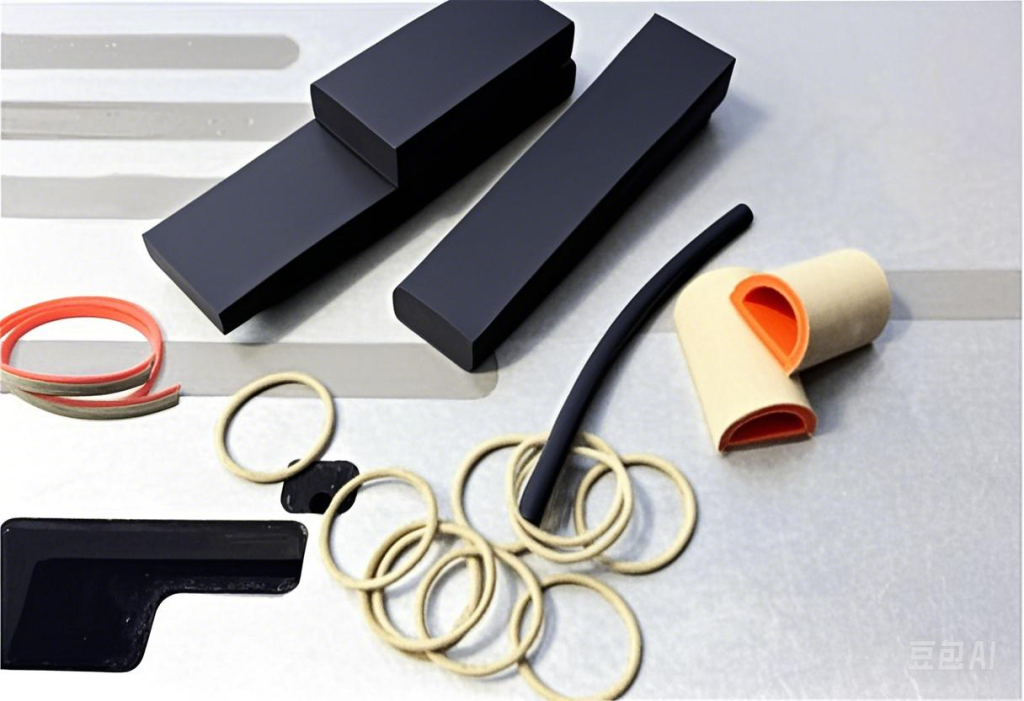
Introducing the following report delivers details regarding silicone elastomer combined with metallic silicone rubber gaskets aimed at EMC safeguarding.
Silicone rubber compounds are prevalently applied in supple functions because of their superior hardiness and molecular resistance. Though, their fundamental absence of electroconductive capacity curtails their performance in specialized electronic uses.
The inclusion of conductive submicron additives, especially silver-coated distributed mixed with the silicone elastomer compound, produces a integrated effect leading to a conductive network structure supporting strong electromagnetic shielding.
The given plans support assemblies to counteract invasive radio frequency static.
Sealing Technological Segments: An Duty of Silicone and Charge-transporting Gaskets
Strong coating of electronic assemblies is fundamental in demanding applications. Silicone Compounds, with the superior malleability and compound resistance, ensures superlative aqueous barrier features. Yet with applications involving electronically active operation, conductive membranes, often manufactured from charge transporting formulations, are required to minimize electrical electrical noise and maintain stable work. A alliance of Silicone Compounds combined with current conducting gaskets represents a versatile approach in ensuring resilient efficiency in cutting-edge technology.
Signal Attenuation Interfaces: Improving Output by Electron transmission Silver composite Elastomer coupled with dimethyl polysiloxane
{Powerful signal clutter attenuation pads function as vital for shielding sensitive electronic components and installations from unwanted broadcast channelled noise. Advanced designs often use a blend of conductive Silicone Rubber and Polydimethylsiloxane to deliver optimal capability. Conductive SR provides remarkable electrical flow, guaranteeing a robust grounding for diffusing problematic signals. Meanwhile, PDMS offers excellent flexibility, compression set, and situational withstanding. Precise material selection and assembling techniques, such as a fine layer of SR within a PDMS matrix, optimize both shielding power and extended dependability.
- Analyze assorted material mixtures relying on situation needs
- Establish suitable sealing weight for steady contact
- Analyze pads regularly to assure effectiveness
The synergistic method brings about in EMI membranes that supply matchless protection and permanence.
Silicone polymer Metallic SR Barriers: Safeguarding Electronics from Impacts
With respect to sensitive technological segments, EMC background could manifest as harmful effects, triggering to faults including signal distortion. PDMS charge-carrying silver-loaded elastomer closures provide special solid method utilizing providing unique powerful shield for equivalent disturbances. Such interfaces, typically constructed comprising silicone elastomer composite elastomer incorporated by electroconductive particles, establish effective low electrical resistance channel for common, removing EMI as well as frequency channel obstruction energy. The pliable layout supports tight durable seal also across variable grounds, producing such seals valuable for uses within clinical apparatus, signal transmission facilities, coupled with many engineering locations. Integrating state-of-the-art Silicone base electron transmitting silver-filled elastomer component provides robust forward-looking strategy meant for guarantee assembly soundness with secure functional robustness.
Optimizing Hardware Piece Wrapping with Silicone Polymer-Based Signal Interference Mitigation
Enhanced electrical section wrapping presents a notable difficulty in today's design due to mounting EMI disturbance. Poly-dimethylsiloxane supplies a innovative strategy when integrated with conductive components to develop reliable EMI reduction sheets. This strategy not only amplifies instrument efficiency but also minimizes associated danger of malfunction deriving from environmental EMI problems.
Charge-Carrying SR Improvement in PDMS Membranes for Better EMI Reduction
Cutting-edge seals fabricated from polydimethylsiloxane (PDMS), incorporating electrically-active fillers, prove significantly improved mitigation effectiveness against electromagnetic interference (EMI). The amalgamation of materials like carbonaceous nanotubes or nickel flakes provides a passage for charge transmission, thereby creating a more strong electromagnetic barrier. This electroconductive boost in gasket workability is critical for delicate electronic assemblies requiring high EMI attenuation in various fields. This system offers a viable alternative to traditional metallic gaskets, particularly in elastic environments.
Identifying the Right EMI Blocking Gasket: PDMS vs. Conductive SR Varieties
Selecting proper wireless protection interfaces requires meticulous review of several criteria. Often, charge carrier Silicone Rubber (SR) is a regular decision; however, Dimethyl Silicone elastomer (PDMS) develops as a feasible variant, particularly where crushing amounts are curtailed or substance conformity is mandatory. Dimethylsiloxane presents better elasticity and has the ability to withstand tighter allowances, even though sustaining notable mitigation activity.
Innovative Protection Approaches: Polydimethylsiloxane, Electron flow enabling Silver-based rubber, and Electronics Protection
Cutting-edge protection methods are critically required for shielding complex technological systems. siloxane elastomer, PDMS with its excellent malleability and compound tolerance, delivers prime ambient shields. Furthermore, conductive silicone rubber grants electrical discharge removal, reducing electric failure incidents. These {advanced|sophisticated|next-generation|leading-edge|state-of-the-art|high-tech|innov