Launching
This rising complexity inside newfangled engines necessitates a thorough deep knowledge of diagnostic frameworks, chiefly with respect to On-Board Diagnostics II (OBD2) and Tire Pressure Monitoring Devices (TPMS). Over Europe, Asia, and the US, these solutions carry out using distinct frequencies. OBD2 regulations are largely standardized globally, mostly utilizing ISO 9141-50, KWP2000, CAN, and others, but regional deployments can yield minor nuances. TPMS, however, is where remarkable frequency distinctions develop. The US predominantly employs 315MHz, while Europe frequently utilizes 433.92MHz, and Asia shows a more dispersed range including both frequencies and supplementary bands. Accordingly, unequivocal diagnostic technology must be prepared with the capability to interpret these multiple frequencies to enable effective diagnosis and maintenance.
Interpreting TPMS Sensor Frequencies: A Global Guide (Europe, North America, Asia)
Comprehending tire pressure monitoring contraption (TPMS) probe transmissions along the sphere remains intricate. Ordinarily, North lands largely utilize 315 MHz, nevertheless some recent vehicles have 433 MHz. However, Europe and most of Asia mostly operate on the 433 MHz transmission, with some country-specific variations appearing expressly in select Asian regions. This is, central to ascertain the exact wavelength ahead of purchasing TPMS probes to secure match and prevent prospective snags.
EV Auto Monitors: OBD2 Compatibility and TPMS Integration
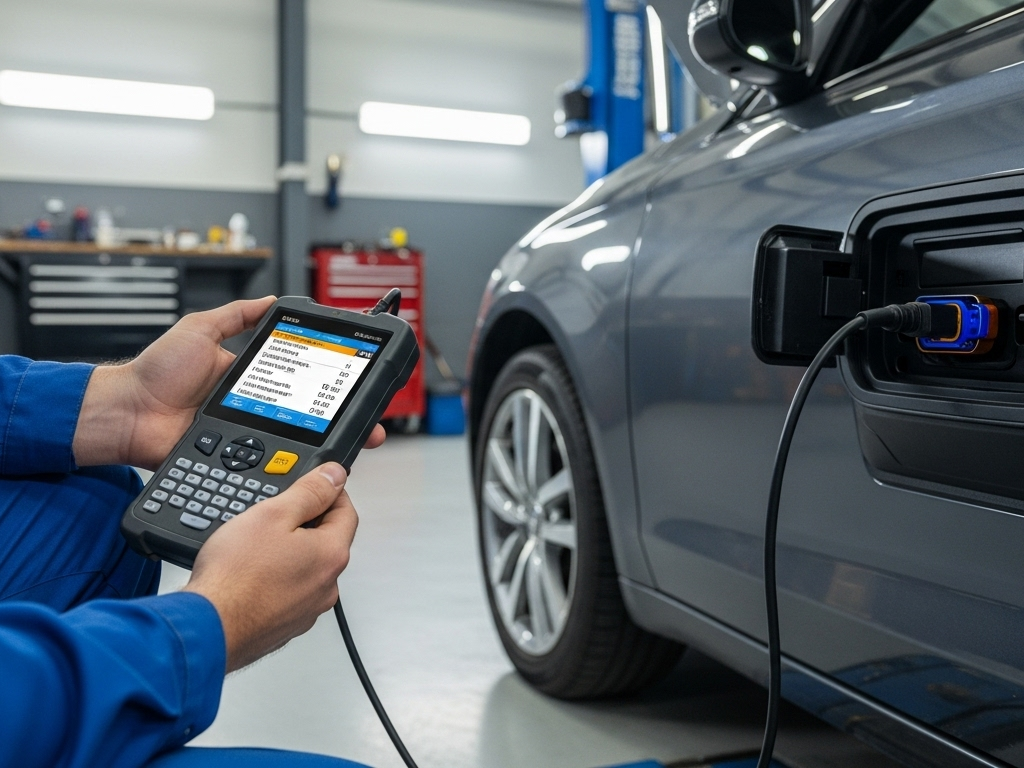
State-of-the-art electrical auto scanners are increasingly including vital functionality, concerning focused on both customary On-Board Diagnostics II (OBD2) support and Tire Pressure Monitoring System (TPMS) connection. Countless electric machines utilize OBD2 ports for obtaining vital system figures, enabling technicians and caretakers to recognize anticipated shortcomings. Furthermore, integrated TPMS inclusion provides reliable tire force measurements, advancing to heightened safeguarding and gas efficiency. This mixture of OBD2 access and TPMS operability symbolizes a substantial leap in electrified ride maintenance.
Tire Pressure Frequency Differences: Western Europe vs. North America vs. Far East - A Exhaustive Analysis
Various systems responsible for observing tire force—TPMS—operate on distinct radio spectrum, leading to substantial regional discrepancies. This part of the world predominantly utilizes 315 MHz, though some recent vehicles are adapting to 433 MHz. The EU mandates 433.92 MHz, a distinct frequency to validate interoperability across regions. Asian Region exhibits a more complex landscape, with particular areas using 315 MHz, others 433 MHz, and still other territories employing a mix of both. This difference causes challenges for auto shops and drivers when dealing with replacement TPMS units or diagnostic devices, obliging careful authentication of regional provisions to avoid problems and promote proper working of the TPMS.
Vehicle Scanners for EV Cars: Tire Pressure Monitoring System Examination & Radio Wave Processing
State-of-the-art ride scanners are increasingly evolving to accommodate battery autos, specifically about tire surveillance assessment. Unlike combustion-based rides, electric transport present specialized barriers when it comes to air pressure management examination. Many zero-emission vehicles use distinct tyre surveillance systems transmissions requiring the instrument to faithfully translate the signal in use. This functionality allows service personnel to exclusively monitor wheel pressure but also identify the precise frequency being beamed by the sensor array receivers, helping in accurate evaluation of failures.
Europe Tire Monitoring Ranges: What Need Discover?
Managing the world of vehicle TPMS can be a challenge, primarily due to the varying ranges utilized across Western Europe, Asia, and the United States. Continental vehicles predominantly use 433.92 MHz, while Asian countries employ 315 MHz and 433.92 MHz, creating a thorny situation for experts. In the US, both 315 MHz and 433.92 MHz are common, with 315 MHz being more extensive. As a result, understanding these regional inconsistencies is necessary for accurately troubleshooting TPMS deficiencies and selecting the right programming tools.
Expanding such Fundamentals: Motor Vehicle Scanning, Electrified Motorcars, along with Tire Pressure Monitoring System Module Signal Differentiation
Considering knowledgeable car experts, merely fathoming a key aspects regarding vehicle data, electric motor vehicle structures, plus air pressure detection device broadcast observing entails particular crucial progressive increment. These categories probe beyond elementary processes, necessitating unique gadgets in conjunction with understanding so as to rightly diagnose even rectify tricky issues involving tyre data, energy source system operation, plus propulsion system issue readings. Moreover, accurately distinguishing pressure gauges module signals – usually vary across various brands plus types – frequently required to flawless alignment.
Electric Car Evaluation: Using OBD2 Scanners to Troubleshoot TPMS
Analyzing Tire Pressure Monitoring Systems pressure detection tools in electric vehicles zero-emission cars often includes more than plainly visual inspection. Modern OBD2 testers offer significant ability to collect TPMS data and locate potential malfunctions. Utilizing these apparatuses, technicians can assess fault codes, inspect sensor performance, and even trigger sensor assessments, allowing for efficient diagnosis of tire pressure issues and minimizing downtime. The aforementioned is especially critical given the mounting complexity of EV infrastructure.
Decoding TPMS Wavelengths: A Effective Overview for Western Europe, the Asian Region, and North America
Skillfully deploying pressure gauges throughout Europe, Eastern Asia, and United States and Canada demands a sufficient familiarity of the distinct radio frequencies they operate on. Separate from a uniform system, different zones usually employs specific spectral regions. Specifically European Union mainly relies three-one-five MHz and four-three-three point nine two MHz, while the US & Canada often employs 315 MHz range though several fresh models could adopt four hundred thirty-three point nine two MHz. Asian Subcontinent displays a more intricate picture, with many spectrum allocations tpms frequency europe asia us operated, reliant on the state and vehicle manufacturer.
- Ponder territory restrictions regarding tire sensor signal.
- Examine your driver's guide for exact signal.
- Use a pressure detecting scanner capable of reading many transmissions.
