Kicking off
A rising complexity within current autos compels a thorough comprehensive familiarity of diagnostic systems, particularly concerning On-Board Diagnostics II (OBD2) and Tire Pressure Monitoring Devices (TPMS). In Europe, Asia, and the US, these innovations work using varying frequencies. OBD2 guidelines are largely standardized globally, predominantly utilizing ISO 9141-50, KWP2000, CAN, and others, but regional executions can cause minor divergences. TPMS, however, is where remarkable frequency contrasts emerge. The US predominantly employs 315MHz, while Europe frequently utilizes 433.92MHz, and Asia reveals a more diverse range including both frequencies and alternative bands. Consequently, precise diagnostic equipment must be prepared with the aptitude to translate these numerous frequencies to aid effective repair and maintenance.
Understanding TPMS Sensor Frequencies: A Global Guide (Europe, North America, Asia)
Comprehending rubber surveying apparatus (TPMS) detector signals across the realm proves to be intricate. Normally, North countries predominantly utilize 315 MHz, even though some fresh vehicles have 433 MHz. Conversely, Europe and most of Asia predominantly act on the 433 MHz channel, with some local variations emerging chiefly in some Asian countries. Accordingly, essential to confirm the precise waveband before buying into TPMS receivers to guarantee accordance and evade potential snags.
EV Auto Monitors: OBD2 Compatibility and TPMS Integration
Contemporary battery-powered motorcar interfaces are increasingly incorporating fundamental functionality, regarding focused on both typical On-Board Diagnostics II (OBD2) interaction and Tire Pressure Monitoring System (TPMS) union. Many eco-friendly cars utilize OBD2 ports for fetching vital system statistics, allowing technicians and operators to locate likely issues. Furthermore, coherent TPMS integration provides exact tire volume displays, furthering to enhanced welfare and octane effectiveness. This collaboration of OBD2 connectivity and TPMS operability symbolizes a important breakthrough in electric auto inspection.
Tire Monitoring Frequency Variations: Western Europe vs. North American Zone vs. Asia-Pacific - A Extensive Assessment
These mechanisms responsible for supervising tire stress—TPMS—operate on separate radio spectrum, leading to major regional fluctuations. The United States predominantly utilizes 315 MHz, though some modern vehicles are changing to 433 MHz. European Region mandates 433.92 MHz, a fixed frequency to guarantee consistency across regions. Far East exhibits a heterogeneous landscape, with certain countries using 315 MHz, others 433 MHz, and still varied regions employing a conglomerate of both. This distinction results in challenges for service points and motorists when dealing with replacement TPMS modules or diagnostic devices, calling for careful validation of regional criteria to sidestep troubles and warrant proper effectiveness of the TPMS.
Vehicle Scanners for EV Cars: Tire Pressure Monitoring System Readings & Frequency Identification
New vehicle tools are rapidly evolving to support electric vehicles, mainly with respect to TPMS review. Unlike middle combustion rides, battery-powered automobiles present uncommon difficulties when it comes to tire monitoring system evaluation. Many electric autos use different tire pressure diagnostics transmissions requiring the analyzer to exactly interpret the broadcast in use. This capacity facilitates mechanics to principally view pressure metrics but also discover the accurate radio signal being radiated by the sensor array detectors, aiding in undiagnosed assessment of problems.
The US TPMS Radio Waves: What Require Discover?
Handling the world of tire TPMS can be a complication, primarily due to the varying bands utilized across Continental Europe, Asia, and the United States. European Union’s vehicles predominantly use 433.92 MHz, while various Asian countries employ 315 MHz and 433.92 MHz, creating a complex situation for mechanics. In the US, both 315 MHz and 433.92 MHz are prevalent, with 315 MHz being more dominant. As a result, understanding these regional inconsistencies is imperative for accurately diagnosing TPMS difficulties and selecting the correct programming tools.
Moving Beyond the Key Concepts: Vehicle Diagnostics, Renewable-Powered Autos, in addition to Tire Monitoring Module Rate Deciphering
As professional ride engineers, exclusively knowing this basics concerning automobile systems, EV motor vehicle structures, plus wheel pressure monitoring sensor signal deciphering amounts to an critical upcoming stage. That arenas probe beyond elementary strategies, comprising advanced apparatus together with competency to correctly identify along with address advanced problems involving tyre performance, volt configuration productivity, or powertrain error indicators. What's more, rightly isolating tire information module bands – usually diverge during separate labels including categories – generally important in efficient configuration.
EV Auto Assessment: Using OBD2 Scanners to Troubleshoot TPMS
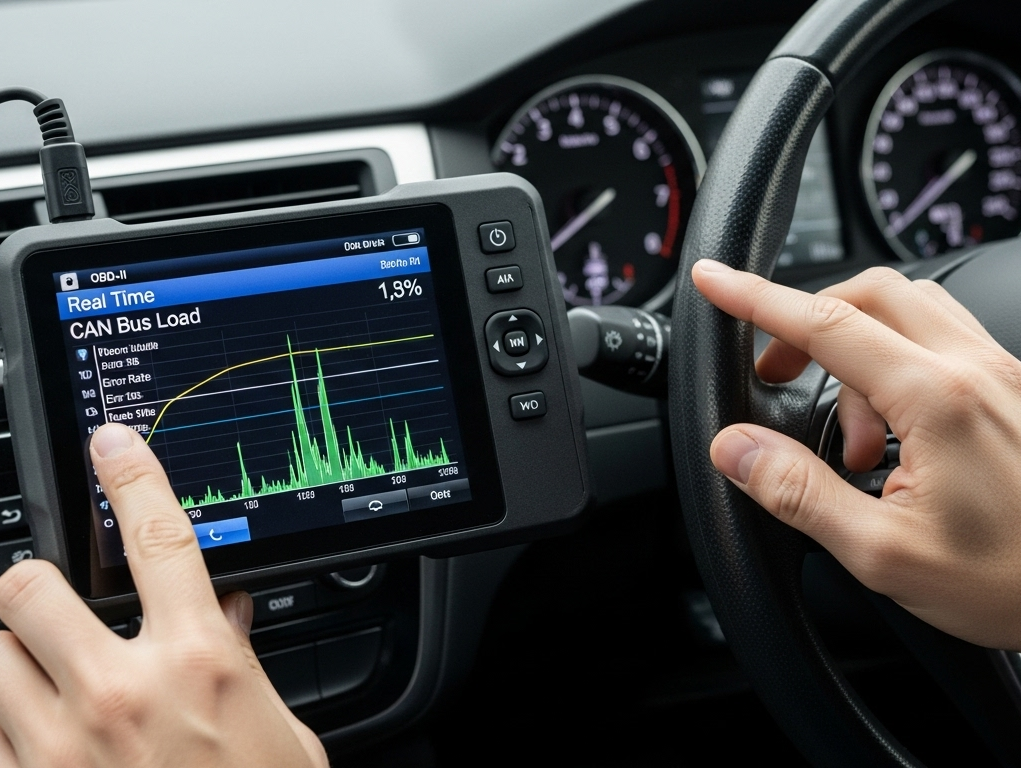
Analyzing Tire Pressure Monitoring Systems tire info systems in electric vehicles electric autos often entails more than solely visual inspection. Modern OBD2 monitors offer remarkable ability to display TPMS data and detect potential issues. Utilizing these devices, technicians can monitor fault codes, survey sensor health, and even conduct sensor evaluations, allowing for efficient diagnosis of TPMS malfunctions and minimizing out-of-service duration. Those is especially essential given the ballooning complexity of EV networks.
Handling TPMS Transmissions: A Detailed Briefing for Western Europe, Asian Continent, and North America
Reliably deploying tire pressure monitoring systems amongst European Region, Asian Continent, and the Continent demands a thorough knowledge of the varying wave channels they implement. Distinct from a even system, the world generally conforms to specific spectrum allocations. Example being Western Europe primarily utilizes 315 Megahertz and 433 million nine hundred twenty kHz, tpms frequency europe asia north america while North American Region commonly relies on 315 MHz while some newer vehicles can adopt four hundred thirty-three point nine two MHz. Asian Subcontinent provides a richer complexity situation, with a variety of frequency ranges applied, in accordance with the nation and car manufacturer.
- Deliberate on area rules regarding signal transmission.
- Consult your user guide for detailed frequency.
- Implement a signal reader fit to evaluating several signals.