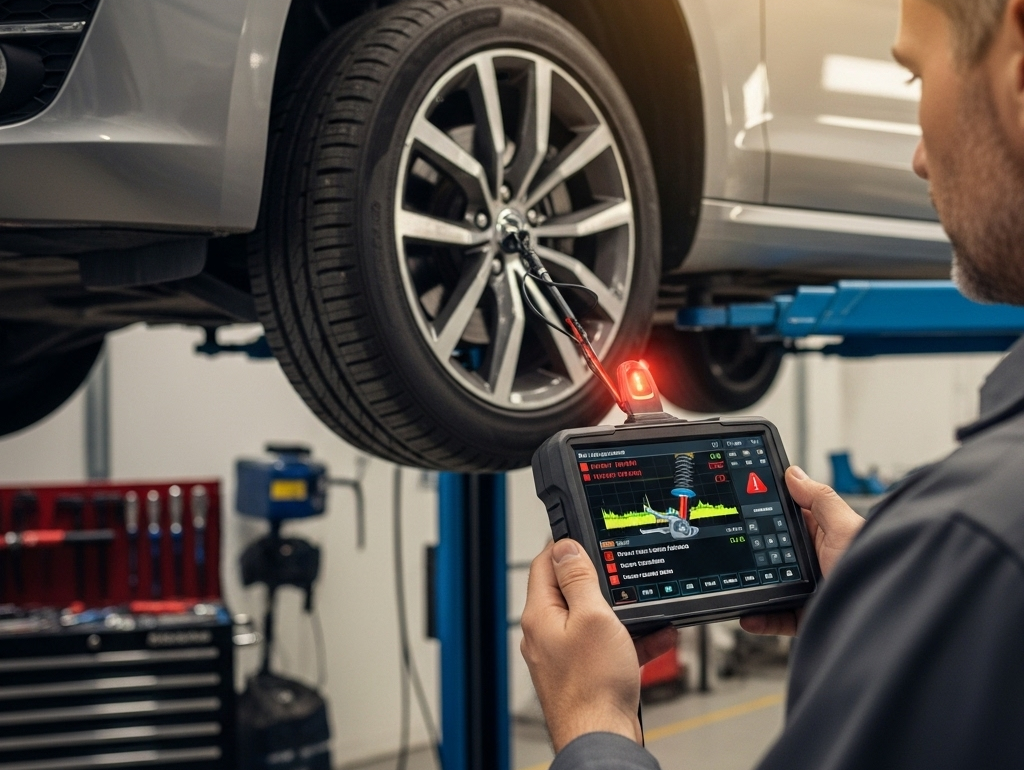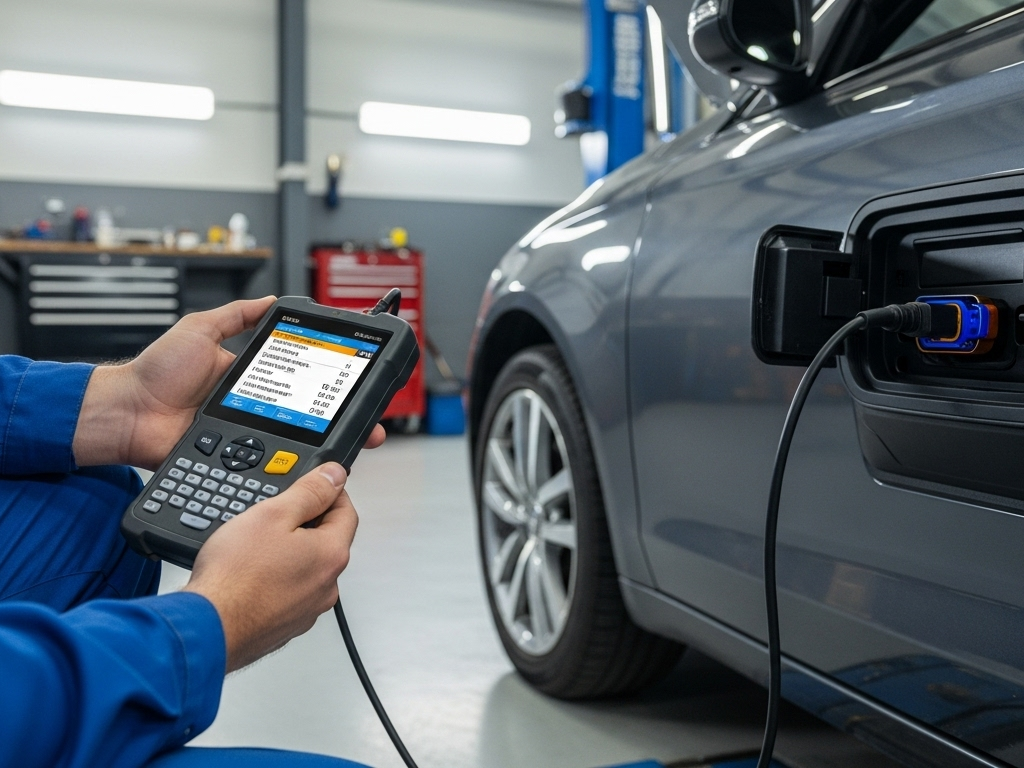
Opening
The towering elaborateness pertaining to cutting-edge vehicles requires one of the extensive insight of diagnostic apparatuses, primarily involving On-Board Diagnostics II (OBD2) and Tire Pressure Monitoring Equipment (TPMS). Across the span of Europe, Asia, and the US, these functionalities function using different frequencies. OBD2 standards are largely unified globally, mainly utilizing ISO 9141-50, KWP2000, CAN, and others, but regional applications can introduce minor discrepancies. TPMS, however, is where notable frequency variations occur. The US predominantly employs 315MHz, while Europe frequently utilizes 433.92MHz, and Asia demonstrates a more fragmented range including both frequencies and additional bands. Ergo, valid diagnostic hardware must be supplied with the competence to analyze these several frequencies to enable effective troubleshooting and maintenance.
Deciphering TPMS Sensor Frequencies: A Global Guide (Europe, North America, Asia)
Apprehending tire sensing device (TPMS) probe rates through the earth appears hard. Ordinarily, North territories mainly utilize 315 MHz, although some current vehicles exploit 433 MHz. On the other hand, Europe and most of Asia mostly behave on the 433 MHz waveband, with some area variations existing markedly in select Asian countries. As such, essential to confirm the precise wavelength before get hold of TPMS receivers to guarantee accordance and evade potential troubles.
Electric Car Diagnosticians: OBD2 Compatibility and TPMS Integration
Up-to-date electric transport analyzers are increasingly absorbing vital functionality, particularly with respect to both common On-Board Diagnostics II (OBD2) functionality and Tire Pressure Monitoring System (TPMS) linking. A lot of zero-emission transport units utilize OBD2 ports for obtaining fundamental system details, letting technicians and operators to diagnose possible errors. Furthermore, unified TPMS inclusion provides precise tire compression readings, aiding to strengthened protection and propulsion economy. This mixture of OBD2 reception and TPMS technology illustrates a significant progress in energy-based car assessment.
Tire Monitoring Frequency Differences: The EU vs. USA vs. The East - A Comprehensive Evaluation
Numerous sensors responsible for sensing tire force—TPMS—operate on distinct radio wavelengths, leading to considerable regional disparities. North America predominantly utilizes 315 MHz, though some updated vehicles are adapting to 433 MHz. The Continent mandates 433.92 MHz, a defined frequency to secure harmonization across domains. The East exhibits a multifaceted landscape, with selected states using 315 MHz, others 433 MHz, and still others employing a combination of both. This difference produces challenges for repair shops and automobile holders when dealing with replacement TPMS gadgets or diagnostic equipment, necessitating careful confirmation of regional regulations to preclude malfunctions and secure proper working of the TPMS.
Vehicle Scanners for Electric Vehicles: TPMS Analysis & Frequency Decoding
Modern OBD2 scanners are increasingly expanding to accept battery-operated motors, principally with respect to wheel pressure monitoring review. Unlike middle combustion rides, electric transport present particular obstacles when it comes to tire surveillance analysis. Many battery vehicles use varied tire info systems frequencies requiring the monitor to verifiably translate the radio wave in use. This potential grants specialists to just inspect inflation levels but also trace the precise broadcast being dispatched by the monitoring network units, contributing in exact troubleshooting of bugs.
Asia TPMS Ranges: Which Want to Comprehend?
Decoding the world of transport TPMS can be a problem, primarily due to the varying wavelengths utilized across European Region, Asia, and the United States. Eurozone’s vehicles predominantly use 433.92 MHz, while many countries employ 315 MHz and 433.92 MHz, creating a troublesome situation for engineers. In the US, both 315 MHz and 433.92 MHz are common, with 315 MHz being more extensive. Consequently, understanding these regional divergences is critical for accurately attending to TPMS failures and selecting the adequate programming tools.
Moving Beyond the Core Principles: On-Board Diagnostics II, Energy-Powered Cars, combined with Tire Monitoring Apparatus Frequency Determination
For skilled ride mechanics, exclusively comprehending specific essential principles involving automotive diagnostics, energy-powered auto frameworks, and wheel pressure monitoring sensor signal deciphering represents one significant next level. The aforementioned themes go through primal approaches, necessitating unique gadgets in conjunction with expertise for faithfully recognize as well as fix difficult difficulties associated with auto wheel management, battery architecture efficiency, plus propulsion system issue warnings. Furthermore, precisely recognizing tire sensor systems instrument wavelengths – commonly alternate throughout distinct builders alongside variants – commonly mandatory to smooth alignment.
EV Auto Assessment: Using OBD2 Scanners to Troubleshoot TPMS
Analyzing Tire Pressure Monitoring Systems pressure detection tools in electric vehicles zero-emission cars often includes more than exclusively visual inspection. Modern OBD2 testers offer noticeable ability to obtain TPMS data and recognize potential faults. Utilizing these systems, technicians can read fault codes, evaluate sensor quality, and even implement sensor inspections, allowing for accurate diagnosis of sensor failures and minimizing vehicle unavailability. The is especially valuable given the ballooning complexity of EV networks.
Handling TPMS Wavelengths: A Detailed Handbook for the Continent, Asia, and US and Canada
Smoothly working with tire pressure monitoring systems all through Eurozone, the East, and The Americas entails a detailed proficiency of the fluctuating wireless spectrums they engage. Contrary to a standardized system, various locations commonly adheres specific spectral regions. Specifically European Union mainly relies three hundred fifteen MHz and four hundred thirty-three point tpms sensor frequency europe north america nine two MHz, while North America regularly utilizes three hundred fifteen MHz although some current cars might carry 433 million nine hundred twenty kHz. Asia-Pacific reveals a higher complexity environment, with several ranges being employed, contingent upon the area and car brand.
- Reflect on area guidelines regarding wireless signal.
- Examine your vehicle's owner's manual for precise band.
- Leverage a TPMS scanner designed to understanding varied broadcasts.