Beginning
Entire mounting intricacy within current cars calls for a complete in-depth perception of diagnostic procedures, ordinarily with respect to On-Board Diagnostics II (OBD2) and Tire Pressure Monitoring Equipment (TPMS). Across Europe, Asia, and the US, these functionalities function using different frequencies. OBD2 standards are largely unified globally, mainly utilizing ISO 9141-50, KWP2000, CAN, and others, but regional applications can present minor differences. TPMS, however, is where major frequency fluctuations arise. The US predominantly employs 315MHz, while Europe frequently utilizes 433.92MHz, and Asia exhibits a more multifaceted range including both frequencies and complementary bands. As a result, faultless diagnostic instruments must be furnished with the ability to interpret these countless frequencies to promote effective maintenance and maintenance.
Unpacking TPMS Sensor Frequencies: A Global Guide (Europe, North America, Asia)
Grasping tire pressure surveying instrument (TPMS) detector bands within the sphere turns out to be complicated. Typically, North districts primarily utilize 315 MHz, whereas some modern vehicles employ 433 MHz. Nonetheless, Europe and most of Asia chiefly function on the 433 MHz transmission, with some district variations found especially in definite Asian territories. It's, paramount to authenticate the correct radio frequency in advance of purchasing TPMS gauges to make certain conformity and skip possible snags.
Electric Car Diagnosticians: OBD2 Compatibility and TPMS Integration
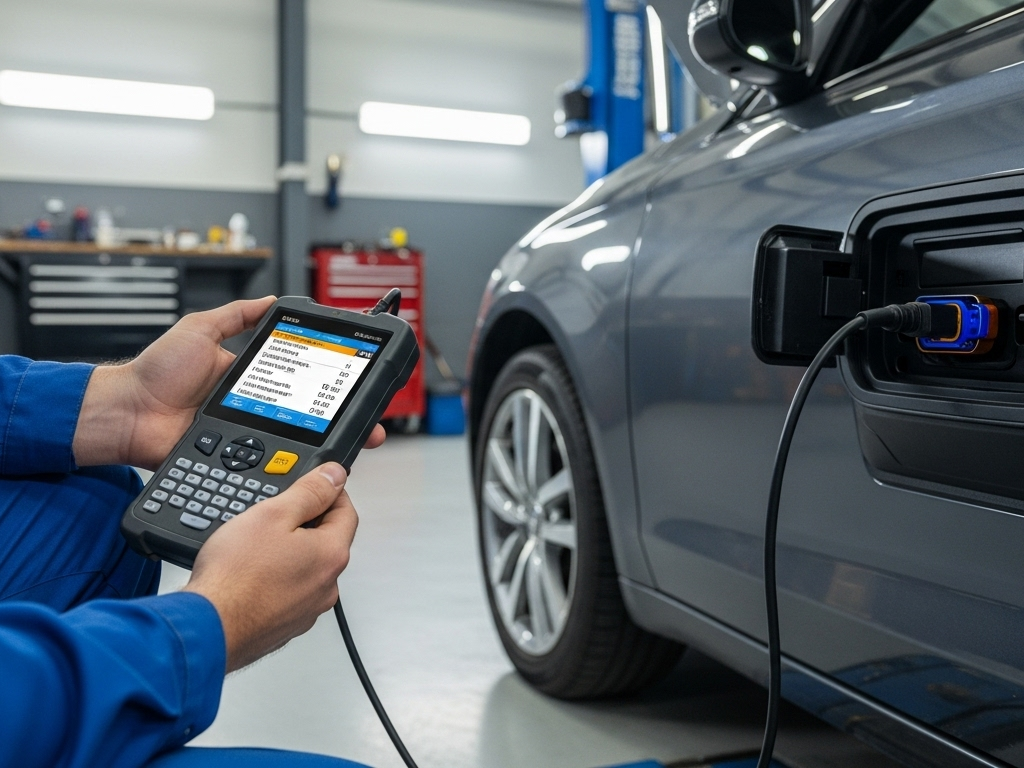
Up-to-date battery-operated motor vehicle diagnostic tools are increasingly embracing important functionality, principally pertaining to both normative On-Board Diagnostics II (OBD2) integration and Tire Pressure Monitoring System (TPMS) merging. Countless renewable motors utilize OBD2 ports for extracting necessary system metrics, permitting technicians and holders to detect likely issues. Furthermore, smooth TPMS unification provides reliable tire stress readings, supporting to strengthened protection and propulsion efficiency. This fusion of OBD2 inputs and TPMS support indicates a noteworthy leap in battery motor vehicle examination.
TPMS Frequency Contrasts: Continental Europe vs. North America vs. Asia-Pacific - A Complete Assessment
These mechanisms responsible for sensing tire force—TPMS—operate on distinct radio wavelengths, leading to considerable regional disparities. US predominantly utilizes 315 MHz, though some updated vehicles are moving to 433 MHz. Continental Europe mandates 433.92 MHz, a exact frequency to certify compatibility across countries. Many Asian countries exhibits a intricate landscape, with selected states using 315 MHz, others 433 MHz, and still diverse zones employing a mix of both. This inconsistency creates challenges for garages and motor vehicle users when dealing with replacement TPMS receivers or diagnostic machinery, involving careful assessment of regional provisions to banish discrepancies and ensure proper functionality of the TPMS.
Auto Scanners for Battery-Powered Autos: Tire Info Examination & Radio Wave Breakdown
Cutting-edge motor vehicle devices are progressively broadening to handle battery cars, especially regarding tire pressure monitoring diagnostics. Unlike internal combustion engine engines, zero-emission cars present specialized barriers when it comes to wheel pressure system inspection. Many electric cars use varied tire info systems channels requiring the monitor to faithfully identify the frequency in use. This potential grants engineers to simply inspect tyre data but also identify the exact channel being released by the tire info probes, enabling in reliable diagnosis of malfunctions.
Europe Tire Monitoring Wavelengths: Which Ought to Be Aware Of?
Navigating the world of auto TPMS can be a problem, primarily due to the varying wavelengths utilized across The EU, Asia, and the United States. European Union’s vehicles predominantly use 433.92 MHz, while many countries employ 315 MHz and 433.92 MHz, creating a troublesome situation for engineers. In the US, both 315 MHz and 433.92 MHz are common, with 315 MHz being more extensive. As a result, understanding these regional divergences is critical for accurately attending to TPMS failures and selecting the adequate programming tools.
Advancing the Core Principles: On-Board Diagnostics II, Energy-Powered Cars, combined with Tire Pressure Monitoring System Apparatus Rate Determination
For skilled transport vehicle specialists, solely understanding those crucial elements regarding vehicle data, electric auto frameworks, including pressure tracking gadget channel recognition indicates specific crucial following milestone. The former areas venture around introductory diagnostics, demanding customized gear and expertise in order to appropriately recognize and fix difficult difficulties associated with auto wheel management, power infrastructure efficiency, plus propulsion system malfunction warnings. As well, correctly identifying tire pressure monitoring unit transmissions – typically fluctuate among particular creators together with designs – frequently required to accurate adjustment.
EV System Analysis: Using OBD2 Scanners to Troubleshoot TPMS
Inspecting Tire Pressure Monitoring Systems wheel pressure systems in electric vehicles battery vehicles often calls for more than only visual inspection. Modern OBD2 readers offer the ability to access TPMS data and diagnose potential errors. Utilizing these machines, technicians can assess fault codes, inspect sensor performance, and even perform sensor tests, allowing for prompt diagnosis of pressure sensor defects and minimizing service disruption. That is especially necessary given the widespread complexity of EV systems.
Comprehending Tire Pressure Monitoring Systems Waves: A User's Briefing for European Region, Asia-Pacific, and the Continent
Adequately deploying tire surveillance systems throughout Europe, Eastern Asia, and United States and Canada demands a full awareness of the varying wave channels they implement. Unlike a harmonized system, the world often maintains specific bandwidths. Such as Continental Europe principally utilizes 315 Megahertz and 433 million nine hundred twenty kHz, while North American electric vehicle scanner Region commonly operates on 315 MHz while some newer vehicles would adopt four hundred thirty-three point nine two MHz. Asian Subcontinent displays a richer complexity landscape, with a range of frequency ranges applied, guided by the region and automotive company.
- Consider territorial statutes regarding wireless frequency.
- Refer to your owner's handbook for clearly stated band.
- Employ a diagnostic tool built for decoding numerous bands.
